
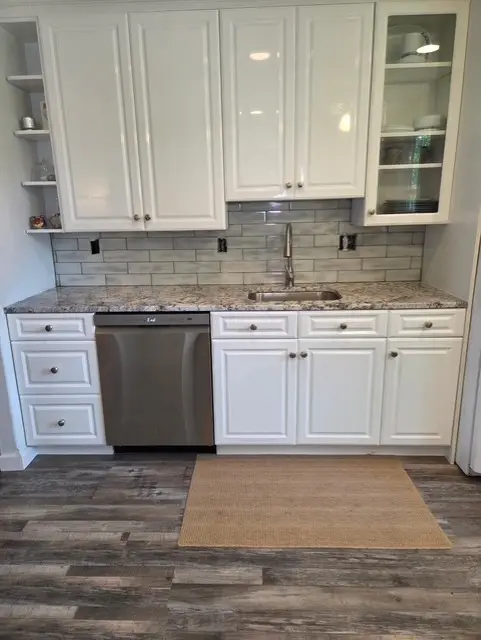
Two kitchens can have similar dimensions and dramatically different renovation costs. The difference usually comes from layout changes, cabinetry, finish selections and what the contractor discovers once existing materials are removed.
1. Keeping or changing the layout
Keeping sinks, appliances and major work zones in their current locations can simplify construction. Moving them may improve how the kitchen works, but it can also affect plumbing, electrical work, flooring and wall repair. A better layout can be worth the investment when the existing room creates daily frustration.
2. Cabinetry and storage
Cabinet quantity, construction, door style, finish and interior accessories all influence cost. Storage planning also matters. A well-designed kitchen uses drawers, pantry space, islands and vertical storage intentionally instead of simply adding more cabinets.
3. Counters, backsplash and finish materials
Countertop material, edge details, backsplash area, flooring and trim can move the budget significantly. Shore-home owners should also think about durability, cleaning and how heavily the space will be used by family and guests.
4. Lighting and electrical needs
Task lighting, island pendants, recessed lighting, outlets and appliance requirements should be discussed early. Lighting is not merely decorative—it changes how safely and comfortably the kitchen functions.
5. Existing conditions
Older homes may contain uneven surfaces, outdated wiring, previous repairs or concealed damage. A transparent contractor explains what can be evaluated beforehand and what may remain unknown until work begins.
How to prepare for the first conversation
- Photograph the current kitchen from several angles.
- List the three biggest functional problems.
- Collect a few examples of styles you like.
- Decide whether you need financing information.
- Choose an honest investment range and preferred timeline.
That information helps Michael or Ava determine whether the project, location and expectations are a strong fit before the detailed planning begins.